One-Trip vs Wind and Watertight vs Cargo-Worthy Containers
By Jack Kelly · Published · Last updated · 9 min read
One-trip, wind and watertight, and cargo-worthy are grades that describe a shipping container's condition. A one-trip container is nearly new: it crossed the ocean once and was sold. A wind and watertight container is used, with no holes or leaks, and is meant for use on land. A cargo-worthy container is used and judged strong enough to carry cargo by sea. For storage, wind and watertight does the job for less. For shipping overseas, what really matters is a valid safety certification, not the grade on the listing.
Grades at a glance
- One-trip (new): crossed the ocean once. Clean paint, and it may have a few small dings and dents. We sell it.
- Wind and watertight (used): visible surface rust, and maybe dings, patches, and dents, but no holes or leaks. The heavy doors can take extra force. We sell it.
- Cargo-worthy (used): judged strong enough to carry cargo by sea. We don't sell it as a grade.
- Shipping overseas: what counts is a seaworthy certification, which we offer as an add-on, priced by location and good for one year.
- Sizes for every grade we sell: 20' Standard and 40' Standard (8' wide, 8'6" tall) and 40' High Cube (8' wide, 9'6" tall).
- Price: quoted delivered to your ZIP, so it depends on size, grade, and location.
That's the quick version. Below is what each grade actually means, what it doesn't promise, and how to pick one for your project.
Why grades are confusing
The first thing to know is that there's no rulebook for these words. Container grades are trade terms. Each seller defines them a little differently, so "cargo-worthy" at one depot may not mean exactly what it means at another. LandedBox, a container quote-comparison site, makes the same point in its guide to container grades: grades are market words, not regulations.
That doesn't make them useless. It just means you should read what a seller says each grade includes, and get it in writing on your quote.
One-trip (new)
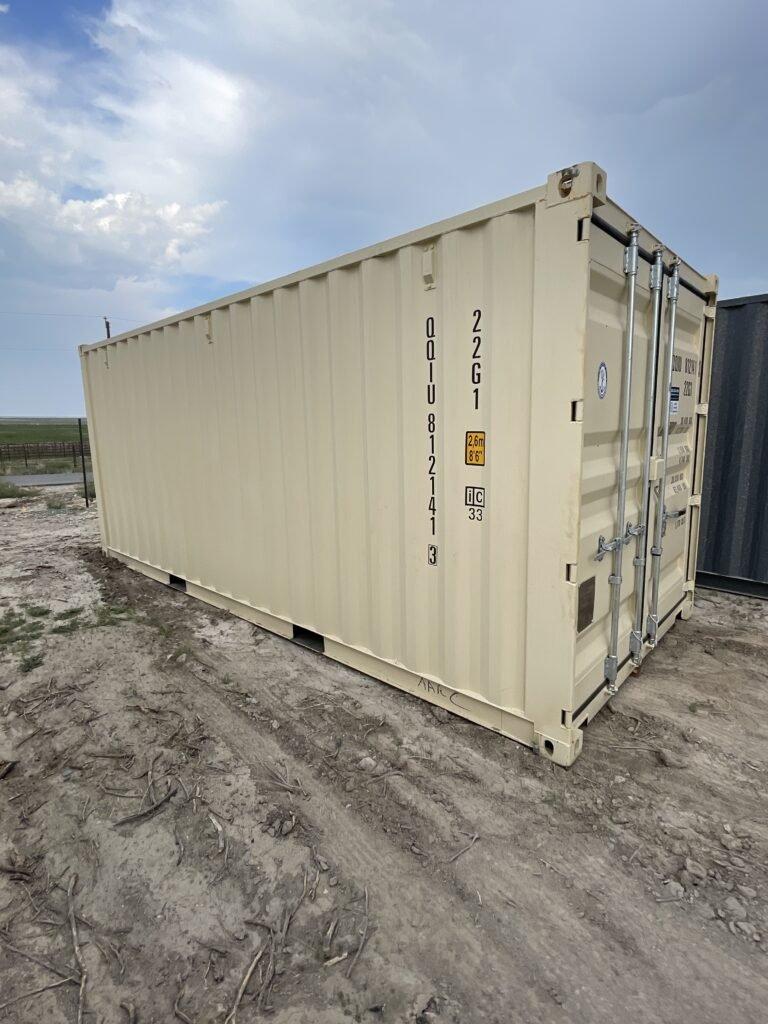
A one-trip container was built at the factory, loaded with cargo for a single ocean crossing, then pulled from service and sold. It's about as close to new as a shipping container gets.
What you can expect:
- Clean, even paint with no surface rust to speak of.
- A floor with very little wear.
- Doors that open and close smoothly.
- A few small dings or dents from that one trip and from handling in the depot. That's normal.
Who it's for: anyone converting a container into an office, shop, studio, or cabin, and anyone putting a container where customers or neighbors will see it every day. If it will sit next to the house, the better look is usually worth it.
Wind and watertight (used)
A wind and watertight container, often shortened to WWT, has retired from shipping. It shows its age: surface rust, dings, dents, and patched spots are common. What it doesn't have is holes or leaks. The doors close and seal, and it keeps wind and rain out.
A few honest notes:
- The doors can be stiff. Container doors are heavy steel with locking bars designed to stay shut at sea. On a used container, they can take some extra force to open and close. Plan on that if you'll be in and out every day.
- Wind and watertight isn't the same as always dry inside. Steel collects condensation when warm days turn into cold nights, which happens a lot in the Mountain West. Container Park Global's guide to container conditions makes this point too. Vents and keeping things off the floor help.
- Looks vary from box to box. Two WWT containers of the same size can look quite different. If looks matter, one-trip is the safer choice.
Who it's for: farms, ranches, job sites, and backyard storage where the job is keeping things dry and locked up, not looking new. It's the usual pick because it costs less than one-trip.
Cargo-worthy (used)
A cargo-worthy container, or CW, is a used container that a seller judges sound enough to be loaded, stacked on a ship, and sent across the ocean. It's also wind and watertight, but the bar is higher on the frame, floor, and structure.
Here's the part that trips people up: "cargo-worthy" on a listing doesn't by itself mean the container holds a current safety exam. Container Technology's explainer notes that shipping a container overseas typically takes an inspection by a marine surveyor, who checks it against the international safety rules and issues a certificate. The LandedBox guide describes cargo-worthy as fit to pass that kind of exam, which isn't the same as holding a current one.
We don't sell cargo-worthy as a grade. If you need to ship a container overseas, the step that counts is the seaworthy certification, covered below.
The rules behind shipping a container by sea
Containers that move in international trade fall under the International Convention for Safe Containers, known as the CSC, from the International Maritime Organization. A few things worth knowing:
- Every approved container carries a CSC Safety Approval Plate, usually on the left door. It shows the country of approval, the month and year of manufacture, the maximum gross weight, and the stacking load the container was tested for.
- Containers get examined on a schedule. According to the Container Handbook's summary of the CSC, the first exam must come within five years of manufacture, and later exams at intervals of no more than 30 months. Many owners instead run an Approved Continuous Examination Program (ACEP), and those containers carry an ACEP mark instead of a next-exam date.
- ACEP belongs to the fleet. LandedBox notes that a fleet's ACEP approval ends when the container is sold, so a container bought for storage and later shipped needs a fresh exam.
You don't need to memorize any of this. The practical point is simple: if a container is going on a ship, it needs a valid safety certification, and the word "cargo-worthy" on a listing isn't that.
Our seaworthy certification
If you're buying a container to ship overseas, you can arrange the certification yourself or buy it from us. A few plain facts about ours:
- The price depends on your location.
- It's good for one year.
- It isn't refunded if you don't use it in time.
If you think you'll ship within the year, mention it when you ask for a quote so it's included up front. If you might ship "someday," it's usually better to wait, because the clock starts when it's issued.
Quick comparison
| One-Trip (New) | Wind & Watertight (Used) | Cargo-Worthy (Used) | |
|---|---|---|---|
| History | One ocean crossing | Retired from shipping | Still judged fit for shipping |
| Looks | Clean paint, maybe a few small dings | Surface rust, dents, patches | Used, varies |
| Holes or leaks | None | None | None |
| Fit to ship by sea | Needs valid certification like any container | Not sold for shipping | Judged fit, still needs a valid exam |
| Best for | Conversions, anything in view | Storage on land | Shipping cargo |
| Do we sell it | Yes | Yes | No. Seaworthy certification available. |
How to pick
Ask yourself three questions:
1. Will it ever go on a ship? If yes, budget for a seaworthy certification no matter which grade you buy. If no, skip cargo-worthy entirely.
2. Will people see it every day? If it's next to the house, at a storefront, or getting turned into living or working space, go one-trip. Clean paint and smooth doors make a real difference when you see it daily.
3. Is it just storage? Feed and tack on a ranch, tools on a job site, or overflow from the garage are all classic wind and watertight jobs. It keeps the same weather out and costs less.
If the storage is only for a job, a move, or a season, renting may fit better than buying. Our shipping container rental page has the monthly rates.
Size is a separate choice from grade. Our new vs used guide has more on how each condition looks in person. Every grade comes in 20' Standard, 40' Standard, and 40' High Cube.
What to check when a used container arrives
Whatever grade you buy, take ten minutes on delivery day:
- Daylight test. Step inside, close the doors, and look for pinpoints of light in the roof and walls. Light means a hole.
- Door seals. Look at the rubber gaskets around the doors. They should be in one piece and press evenly when the doors close.
- Doors and locking bars. Open and close both doors. Stiff is normal on a used box. Doors that won't latch are not.
- Roof. Look from a ladder if you can. Pooled water and soft-looking spots are what you're looking for.
- Floor. Walk the whole floor. It should feel solid underfoot.
- CSC plate. If shipping matters to you, read the plate on the door for the manufacture date and the exam date or ACEP mark.
In most areas you pay on delivery by credit card, debit card, or Zelle, so you see the container before you pay for it.
Getting a price for each grade
The fastest way to compare is to price both. Grade and size both change the price, and so does your ZIP code, since it's quoted delivered. Send us your ZIP and the size, check "Not sure" on condition if you're torn, and we'll quote one-trip and wind and watertight side by side.
Questions
Is a wind and watertight container waterproof?
It has no holes and no leaks, and the doors close and seal, so rain and wind stay out. That isn't the same as a dry interior in every climate. Steel boxes can collect condensation when warm days turn into cold nights, so plan for vents and airflow if you're storing things that hate moisture.
What is the difference between one-trip and new?
A one-trip container is about as new as a shipping container gets. It was built, loaded once for an ocean crossing, and then sold instead of going back into service. That single trip can leave a few small dings and dents, but not the surface rust and patches you'll see on a used container.
Do I need a cargo-worthy container for storage?
No. Cargo-worthy is about strength for being loaded, stacked, and shipped at sea. For storage on a farm, a job site, or in a yard, a wind and watertight container keeps out the same weather and costs less. Pick based on where it will sit and how it needs to look.
Can I ship a container I buy from you overseas?
Yes, with a seaworthy certification. You can arrange it yourself or buy it from us. The price depends on your location, the certification is good for one year, and it isn't refunded if you don't use it in time. Tell us when you ask for a quote so we can include it.
What is the CSC plate on a container?
It's the Safety Approval Plate required by the International Convention for Safe Containers, usually fixed to the left door. It shows where the container was approved, when it was built, its maximum gross weight, the stacking load it was tested for, and its exam dates or an ACEP mark.