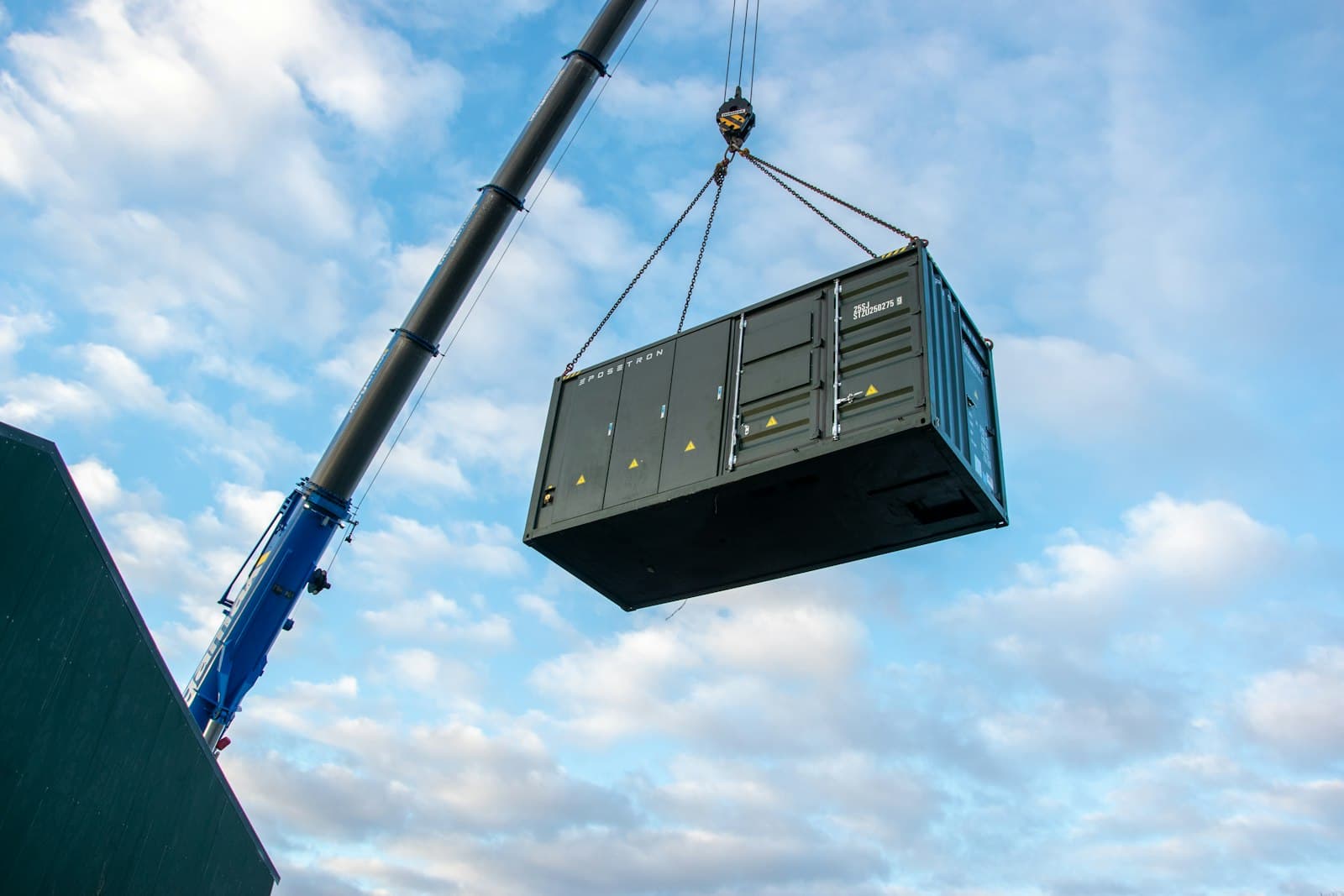
How Much Space Do You Need to Deliver a Shipping Container?
By Jack Kelly · Published · Last updated · 10 min read
| Trailer for every size | 40 ft |
|---|---|
| Truck and trailer together | about 65 ft |
| Straight room in front of the drop spot | 100 to 120 ft |
| Shorter 20' trailer (some areas) | 80 to 100 ft |
| Clear width | 12 ft |
| Overhead clearance | 15 to 16 ft |
| Ground | firm and level, no tight turns |
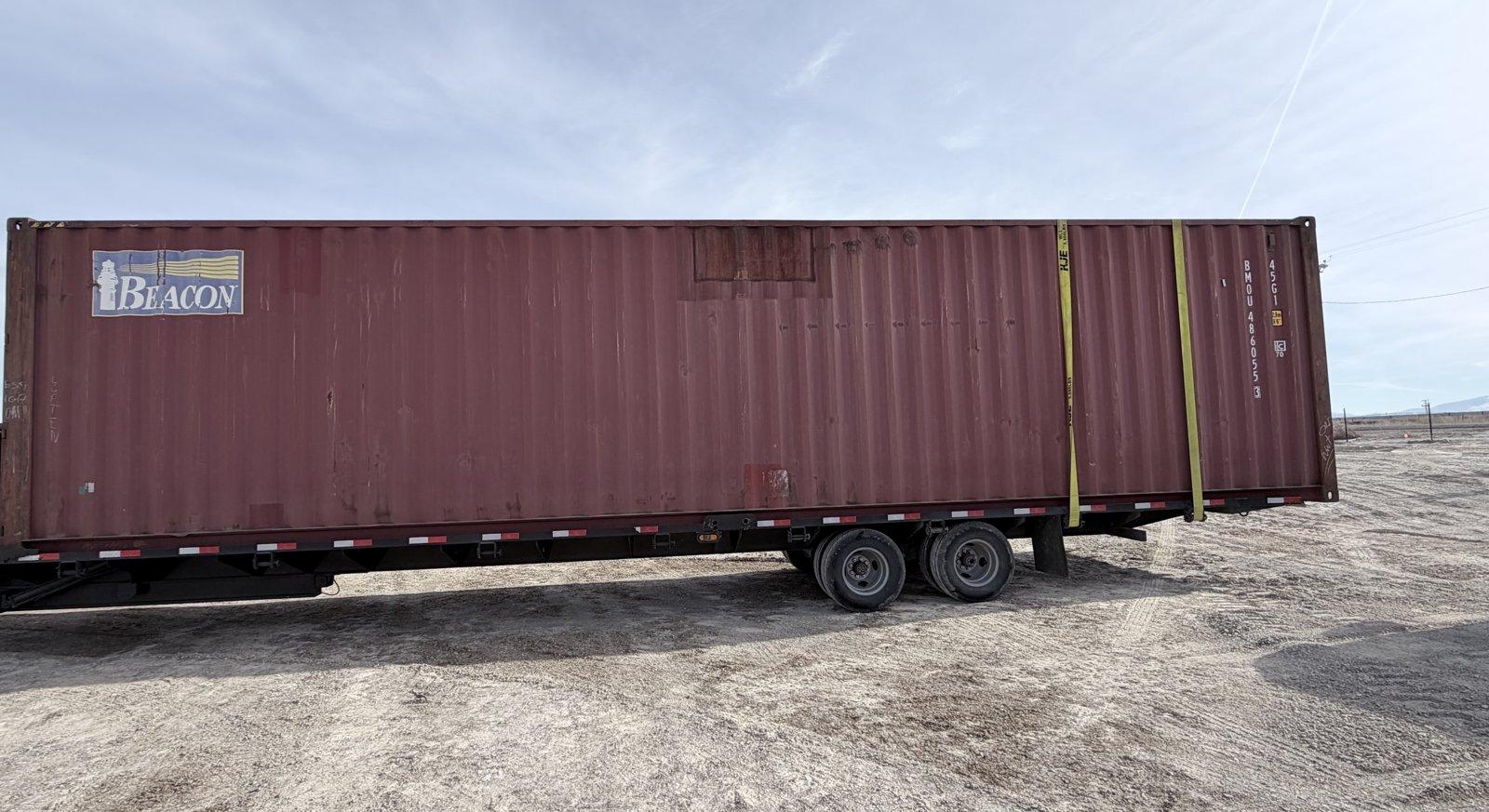
To deliver a shipping container, you need room for the truck and trailer, not just the container. Every container we deliver comes on a 40-foot trailer, even a 20'. Our delivery guidelines call for 100 to 120 feet of straight, open room in front of the spot where the container goes, 12 feet of width, and 15 to 16 feet of overhead clearance. The drop spot itself needs to be firm and level, and the route in can't require tight turns.
Delivery space at a glance
- Trailer: 40 feet long for every container size, including a 20'.
- Truck and trailer together: about 65 feet.
- Straight room in front of the drop spot: 100 to 120 feet.
- Shorter trailer for a 20' (some areas only, may cost extra): 80 to 100 feet.
- Width: 12 feet along the path and at the drop spot.
- Overhead clearance: 15 to 16 feet. Standard containers are 8'6" tall and high cubes are 9'6".
- Ground: firm and level at the drop spot, with no tight or jackknife turns on the way in.
- Timing: usually 1 to 2 weeks after you pay, with a rush option.
That's the short answer. Below is each number, why it matters, and a quick way to check your own property.
Why the trailer matters more than the container
Most people measure the spot where the container will sit and stop there. A 20' Standard is about 20 feet long and 8 feet wide, so a 10 by 25 foot patch of gravel looks like plenty.
The problem is getting it there. The container arrives on a truck pulling a 40-foot trailer, and that rig has to:
- Turn off the road onto your property.
- Drive in a straight line to the spot.
- Set the container down.
- Pull forward and away, or back out the way it came.
Each of those steps needs room. A driver can't set a container down at an angle from a curve, and a truck that can't turn around at the end of a long driveway has to back all the way out. So the question isn't "will the box fit?" It's "can a truck with a 40-foot trailer get in, unload, and get out?"
If you're buying a 20', you might expect a smaller trailer. That's not how it works: every size ships on a 40-foot trailer, with one exception covered below.
The three numbers to check
1. Straight-line length: 100 to 120 feet
You need 100 to 120 feet of straight, open room out in front of where you want the container placed. That's the space the truck pulls forward into as the container comes off the back of the trailer. A fence, building, ditch, or row of parked cars in that stretch is a problem.
That number is on top of getting the rig onto your property in the first place. The truck and trailer together run about 65 feet, so the approach from the road needs to fit all of that, lined up straight with the drop spot. Our drivers can't make tight or jackknife turns with a container on the trailer, so a driveway that bends sharply right before the spot won't work.
The shorter trailer option for a 20'. In some areas, a driver has a shorter trailer for a 20'. That setup needs 80 to 100 feet of straight room instead. It isn't available at every depot, and it can cost extra, so ask when you get your quote, not on delivery day.
2. Width: 12 feet
Plan for 12 feet of clear width along the path and at the drop spot. A container is 8 feet wide and the trailer is about the same, but drivers need room on both sides, and mirrors stick out further than you'd think.
Pay attention to:
- Gates. A 10-foot gate between two posts won't do it. Measure post to post, not the gate itself.
- Driveway pinch points between a house and a fence, or between parked vehicles.
- Turns. A long trailer cuts corners. If the path bends at all, the inside of the curve needs extra room.
3. Overhead clearance: 15 to 16 feet
Plan for 15 to 16 feet of open space overhead, depending on the container. A standard-height container needs the lower end. A 40' High Cube is a foot taller, so plan for the higher end. A container sitting on a trailer deck rides well above its own height.
Look up along the entire route, not just at the drop spot:
- Power lines and phone lines, including the drop line from the pole to your house.
- Tree limbs. They scrape the container and can snap.
- Carports, porch roofs, and gutters near the path.
- Signs or lights on a commercial lot.
If a line crosses your driveway lower than about 16 feet, flag it before you order.
How this compares
Other dealers publish similar ranges, such as Containers Delivered and UC Containers. Trailers differ, so go by the numbers from the company delivering yours.
The ground matters as much as the space
A loaded delivery truck is heavy. The path and the drop spot both need to hold it.
Firm. Dry gravel, compacted dirt, asphalt, and concrete all work well. Wet lawn, fresh fill, sand, and thawing ground in spring can leave a truck stuck, and then nobody's having a good day. If it has rained hard or the ground is soft, tell us before delivery day.
Level. Our drivers can only set a container down on level ground, and it should stay level once it's down. A container on a slope puts stress on the frame, and the doors may bind or swing on their own. The doors on a used container already take some extra force to open, and a twisted frame makes that worse. A few inches of slope can be corrected with blocks or a gravel pad. A steep grade needs real site work first.
Dry. A spot where water pools will keep the bottom of the container wet. Pick higher ground or build up a gravel pad so water drains away.
We cover foundation options, from bare ground to gravel pads to blocks, in a separate guide.
Plan the doors before the truck shows up
Once a container is on the ground, turning it around is a big job. Decide before delivery day:
- Which way the doors face. Container doors are on one end. Think about where you'll walk from, where a vehicle or loader needs to reach, and which side gets weather.
- Room to swing the doors. Each of the two doors is close to half the container's width, so it swings out about 4 feet. Leave enough room in front to open them all the way and still walk in.
- Distance from fences and buildings. You'll want to walk around the container to check it and, eventually, paint or touch up rust.
Tell the driver which way you want the doors when they call. Better yet, mark the spot with stakes or spray paint and note the door end.
A 15-minute check you can do this week
Grab a tape measure and your phone:
- Start at the road. Can a truck with a 40-foot trailer make the turn in? Look at the ditch, the culvert, and the mailbox.
- Measure the gate or narrowest point. Write down the width.
- Pace off the straight run in front of the drop spot. A normal walking stride is close to 2.5 feet, so 40 to 48 strides covers 100 to 120 feet.
- Look up along the whole route. Any wire or branch that might hang lower than 16 feet needs a closer look. If you can't tell, take a photo.
- Check the ground. Is it firm when you stomp on it? Does water pool there after rain?
- Pick the door direction and mark the corners.
- Take photos of the path from the road and of the drop spot. They help us and the driver if anything looks tight.
If something fails the check, that's not the end. A different spot, trimming a branch, or a shorter trailer for a 20' in some areas may solve it. It just needs to come up before the container is on the road.
Rules about where it goes
Space isn't the only thing that decides where a container can sit. Rules for placing a container on your property vary by city, county, and HOA. Check with your local zoning office before delivery.
Common questions to ask them: Does a container used only for storage need a permit? Are there setback rules from property lines? Is there a size limit for accessory structures in your zone? Start by finding out who you ask. Utah County's Community Development building page, for example, says that office only serves unincorporated parts of the county, and that properties inside a city follow that city's codes. So the first question is whether your land sits inside city limits.
What delivery day looks like
Once the spot is ready, the rest is simple. Delivery usually takes 1 to 2 weeks from the day you pay, with a rush option if you need it sooner. After you pay or sign a pay-on-delivery agreement, our logistics team contacts you to schedule delivery. On the day, the driver calls with an approximate arrival time.
In most areas you can pay on delivery by credit card, debit card, or Zelle, so you see the container on your ground before you pay for it. Our delivery page covers the steps in more detail.
Picking the right size for your space
If space is the deciding factor, the size you choose changes what fits where it sits, even though the truck is the same:
- A 20' Standard covers about 160 square feet and fits in a driveway or side yard, as long as the trailer can get to it.
- A 40' Standard doubles the floor space but needs twice the length at the drop spot.
- A 40' High Cube has the same footprint as a 40' Standard with an extra foot of height. Check overhead clearance with that extra foot in mind.
Only need the space for a few months? We also rent the 20' and both 40' sizes, and the shipping container rental page has the monthly rates. A rental comes on the same trailer, so the same space check applies.
When you're ready, send us your ZIP and the size you need and we'll quote it delivered. Mention anything tight on your route, like a narrow gate or low wires, so we can sort it out up front.
Questions
Does a 20-foot container really need room for a 40-foot trailer?
Usually, yes. We deliver every size on a 40-foot trailer, so a 20' needs the same 100 to 120 feet of straight room as a 40'. In some areas a driver has a shorter trailer for a 20', which needs 80 to 100 feet. It isn't available everywhere, and in some locations it costs extra.
How much overhead clearance does container delivery need?
Plan for 15 to 16 feet of open space overhead. A standard container needs the lower end and a high cube, which is a foot taller, needs the higher end. Look up along the whole route for power lines, phone lines, tree limbs, gutters, and carport roofs, not just at the drop spot.
Can a container be delivered on soft ground or grass?
A loaded truck is heavy, so soft ground, wet lawn, or fresh fill can leave it stuck, and the container has to come off onto level ground. Dry, firm ground is the goal for the path and the drop spot. If it has rained hard, or the ground is thawing, tell us before delivery day.
Where should I put the container so I can use it?
Think about which way the doors should face before the truck arrives, because it's much harder to turn the container later. Leave room in front of the doors to swing them fully open, keep the spot level, and set it where you can reach it in bad weather.
Do I need a permit before delivery?
It depends on where you live. Rules for placing a container on your property vary by city, county, and HOA. Check with your local zoning office before delivery. Ask whether a container used for storage is treated differently from a permanent structure.