Conex Box vs Shipping Container: Is There a Difference?
By Jack Kelly · Published · Last updated · 8 min read
| Conex box today | Another name for a steel shipping container |
|---|---|
| CONEX stands for | Container Express, a US Army program from late 1952 |
| Sizes we sell | 20' Standard, 40' Standard, 40' High Cube |
| Width | 8 feet on every size |
| Height | 8'6" Standard, 9'6" High Cube |
| Floor area | About 160 sq ft (20') or about 320 sq ft (40') |
| Conditions | One-Trip (New) or Wind & Watertight (Used) |
| Ways to get one | Buy, rent, or rent to own |
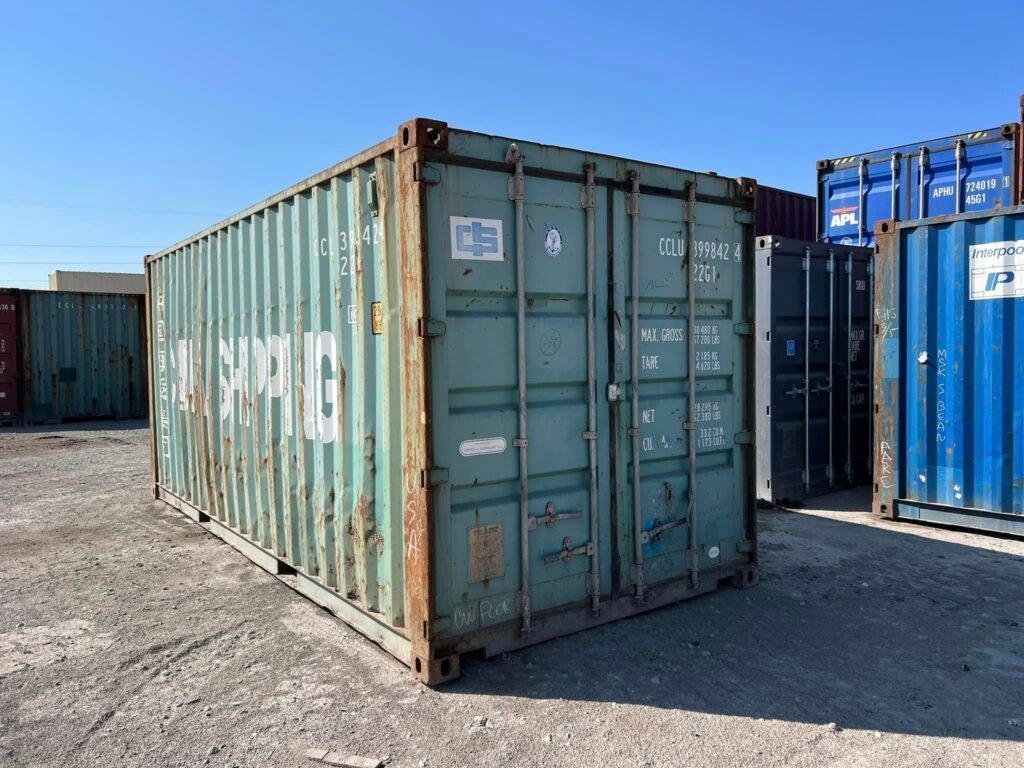
A conex box is a shipping container. There's no difference in what you get today. "Conex" comes from CONEX, short for Container Express, a US Army shipping system from the early 1950s. The Army's boxes were much smaller than today's, but the name stuck, and people now use it for any steel shipping container. If you're shopping for a conex box, you're shopping for a 20' or 40' shipping container, new or used, to buy or rent.
Conex box at a glance
- Same product: conex box, conex container, storage container, and shipping container all mean the same steel box.
- Where the name comes from: CONEX, or Container Express, a US Army Transportation Corps system developed in late 1952.
- Sizes we sell: 20' Standard, 40' Standard, and 40' High Cube. All are 8' wide. Standards are 8'6" tall and the high cube is 9'6".
- Conditions: One-Trip (New), which crossed the ocean once, and Wind & Watertight (Used), which shows its age but has no holes or leaks.
- Buy or rent: buy outright, rent month to month, or rent to own.
- Delivery: usually 1 to 2 weeks, with a rush option if you need it sooner.
The rest of this post covers where the word came from, how the original compares to what you'd buy now, and how to pick the right one.
Where the name "conex" comes from
The story starts with the US Army. According to the US Army Transportation Museum's history of the CONEX, the Army began experimenting with shipping supplies in containers as early as World War II. Cargo sat at ports while ships were loaded and unloaded by hand, and a lot of it was stolen or broken along the way.
In 1948 the Army's Transportation Corps adopted a steel box it called the "Transporter." The museum describes it as a rigid, reusable steel container that could carry 9,000 pounds. It was 8'6" long, 6'3" wide, and 6'10" high, with double doors on one end, skids underneath, and lifting rings on the top corners.
The Transporter proved itself during the Korean War. The museum notes that crates coming off ships at the Port of Pusan were being dropped and broken at a high rate, and theft was a daily problem. Steel boxes held up better on both counts.
In late 1952, the Transportation Corps developed the Container Express, or CONEX, to replace the Transporter. The museum says it cut a shipment that normally took about 55 days down to 27. Wikipedia's Conex box article adds that the system came in a full size and a half size that could be combined, and that the boxes could be stacked three high.
By 1965 the military had some 100,000 CONEX boxes, and more were bought as the Vietnam War grew. The Army museum notes that many of them never came home. They were put to work on site as command posts, clinics, stores, and storage. In a way, that's the same job most conex boxes do today: sitting in one place and keeping things dry and locked up.
The original conex vs a modern shipping container
The containers you buy today aren't the Army's design. Commercial shipping companies were building their own containers in the 1950s, and international size standards followed in the late 1960s, according to Wikipedia's history of the intermodal container. Those standards are why almost every container is 8 feet wide and either 20 or 40 feet long.
Here's how they compare:
| Original Army CONEX (approx.) | 20' Standard | 40' Standard | 40' High Cube | |
|---|---|---|---|---|
| Length | About 8'6" | 20' | 40' | 40' |
| Width | About 6'3" | 8' | 8' | 8' |
| Height | About 6'10" | 8'6" | 8'6" | 9'6" |
| Floor area | About 53 sq ft | About 160 sq ft | About 320 sq ft | About 320 sq ft |
The original numbers are the Transporter's, which the CONEX was based on and closely matched in size, per the Wikipedia article. The point is simple: a conex box from the 1950s was roughly the size of a large walk-in closet. A modern 20' has about three times the floor space, and a 40' has about six times.
What people mean when they say conex box
When people search for a conex box today, they almost never mean a small military unit. They mean a standard steel shipping container they can put on their property. Common uses include:
- Storage on a farm or ranch for feed, tack, and equipment.
- Tool and material storage on a job site.
- Extra room at home during a move or a remodel.
- A starting shell for a shop, office, or cabin conversion.
So if you see "conex box for sale" on one listing and "shipping container for sale" on another, compare them the same way. The name tells you nothing about size or condition. Ask for the length, the height, the condition grade, and a delivered price to your ZIP.
One thing to know: the US military still uses small containers today, called Bicon, Tricon, and Quadcon units, according to the same Wikipedia intermodal container article. Those are fractions of a 20' container, and we don't sell them. If you want something smaller than a 20', tell us what you're storing and we'll help you figure out whether a 20' works for your space.
Conex box sizes we sell
We sell three sizes. They're all 8' wide, so the choice comes down to length and height.
20' Standard. 20' long and 8'6" tall, with about 160 square feet of floor. It's the size most people picture when they hear "conex box." It takes the least ground of the three, which makes it the usual pick for a driveway, a backyard, or a spot beside a barn.
40' Standard. 40' long and 8'6" tall, with about 320 square feet of floor. That's twice the room of a 20', and it needs a spot twice as long. It makes sense on farms, ranches, and job sites with space to spare.
40' High Cube. Same footprint as the 40' Standard, but 9'6" tall. That extra foot helps with tall equipment, stacked shelving, and conversions where a floor and ceiling eat into headroom. A used 40' High Cube is the most popular container we sell.
New or used
Every size comes in two conditions:
- One-Trip (New): built, loaded once for an ocean crossing, then sold. Clean paint, and maybe a few small dings. It's the pick when the container will be in view every day or turned into living or working space.
- Wind & Watertight (Used): retired from shipping. Expect surface rust, dents, and patches, but no holes or leaks. It costs less than new and does the same job of keeping weather out.
If you want the details on what each grade means, and what "cargo-worthy" means on other listings, read our guide to container grades. Our new vs used page shows how each looks in person.
Buying or renting a conex box
You don't have to own one. If you only need storage for a job, a move, or a season, a conex box rental may fit better. We rent 20' and 40' containers month to month with a 3-month minimum, and the shipping container rental page lists the monthly rates. Delivery is quoted by ZIP, and the pickup fee is billed at pickup.
If you'll keep it, buying outright usually makes more sense. Rent to own sits in between: you make monthly payments with the option to keep the container at the end.
How you pay depends on how you buy. When you buy outright, most areas let you pay on delivery by credit card, debit card, or Zelle, so you see the container before you pay. Rent to own is different. The deposit and first monthly payment are due when you sign, before delivery.
Getting one delivered
Every container, even a 20', usually arrives on a 40-foot trailer. That means the driver needs room to pull in, set it down, and pull back out. Before you order, check how much space delivery needs so there are no surprises on delivery day.
Delivery usually takes 1 to 2 weeks, with a rush option if you need it sooner. Rules for placing a container on your property vary by city, county, and HOA. Check with your local zoning office before delivery.
A note on "conex for sale" listings
Because "conex box" is such a common search, it's also a common word in fake listings. If a price looks far below everything else you've seen, or a seller pushes you to pay in full before you can confirm the company is real, slow down. Our guide on how to avoid shipping container scams walks through the warning signs.
Getting a price
Conex box or shipping container, the price works the same way. It depends on the size, the condition, and how far your ZIP is from the nearest depot, so we quote it delivered to your address. Send us your ZIP and the size you're after, and if you're torn between new and used, check "Not sure" and we'll price both.
Questions
Is a conex box the same as a shipping container?
Yes. Today conex box, conex container, storage container, and shipping container all describe the same steel box. The name comes from an Army program, but the containers sold under that name now are standard 20' and 40' shipping containers.
What does CONEX stand for?
Container Express. It was the name of a US Army Transportation Corps container system developed in late 1952, during the Korean War, to move supplies overseas with less damage and theft.
How big is a conex box?
The ones sold today are usually 20 or 40 feet long and 8 feet wide. A standard container is 8'6" tall, and a high cube is 9'6" tall. The original Army CONEX was much smaller, roughly 8 and a half feet long.
Can I rent a conex box instead of buying one?
Yes. We rent 20' and 40' containers month to month with a 3-month minimum. Our shipping container rental page lists the monthly rates, and delivery is quoted by ZIP.
What size conex box do I need?
A 20' has about 160 square feet of floor and takes the least ground. A 40' doubles the floor space to about 320 square feet but needs a spot twice as long. If you need headroom for tall equipment or a conversion, look at the 40' High Cube.