How Long Do Shipping Containers Last Outdoors?
By Jack Kelly · Published · Last updated · 8 min read
| Typical life at sea | About 10 to 15 years before shipping lines retire them (Port Economics, Management and Policy) |
|---|---|
| Life on land | Often decades with basic care; no fixed number |
| Steel | Weathering (corten) steel with a marine paint system |
| Floor | Plywood on most standard containers |
| Biggest threats | Standing water, salt air, damaged paint, a soft or uneven base |
| Conditions we sell | One-Trip (New) or Wind & Watertight (Used) |
| Delivery | Usually 1 to 2 weeks, with a rush option |
A shipping container usually spends about 10 to 15 years at sea before the shipping line retires it. Once it's on land, sitting still and out of the salt spray, it can keep working for decades. There's no fixed expiration date. How long yours lasts depends on the climate, whether water can pool on it, the condition of the paint, and how it sits on the ground.
How long containers last, at a glance
- At sea: about 10 to 15 years in service, and occasionally up to 20, before shipping lines retire them, according to Port Economics, Management and Policy.
- On land: often decades with basic care. Nobody can promise a number, because the site and the weather matter more than the calendar.
- What they're made of: weathering steel (often called corten), a marine paint system, and on most standard boxes a plywood floor.
- What wears them out: standing water, salt air, scratched or peeling paint, and a soft or uneven base.
- Conditions we sell: One-Trip (New) and Wind & Watertight (Used), in 20' Standard, 40' Standard, and 40' High Cube.
Why shipping lines retire containers so early
Life at sea is hard on a steel box. A container gets lifted by cranes, stacked on ships and in port yards, bounced on trucks and rail cars, and soaked in salt spray on every crossing. The Port Economics, Management and Policy guide puts a container's working lifespan at 10 to 15 years, depending on how hard it's used and what it's exposed to. It says a well-kept box out of harsh conditions can reach 20 years, but that's uncommon.
Retirement is usually about money, not about the box being worn out. In an interview published by the New Zealand Company of Master Mariners, an executive at TAL International, a large container leasing company, said its containers were retired at an average age of 13 years, up from the more common 10 to 12. At some point, keeping an older box certified for ocean shipping costs more than it earns, so it gets sold.
That's where most used containers come from. A box that's no longer worth keeping in the global shipping fleet can still be perfectly good for keeping tools, feed, or furniture dry on your property.
How long a container lasts on land
On land, a container's life gets a lot easier. Nobody's stacking loaded boxes on top of it, swinging it from a crane, or sending it through ocean storms. It just sits there.
How long it lasts from that point is honestly hard to pin down, and anyone quoting you an exact number is guessing. CNTNR Partners, a container leasing and sales company, says new containers in domestic use last more than 20 to 25 years. That's a seller's estimate, not a study, but it matches what you see in the field: plenty of containers sit on farms and job sites for many years past their shipping careers.
What actually decides it comes down to four things.
1. Climate
Container steel is built to handle weather, but some weather is harder on it than others. Containers are made from weathering steel, which Wikipedia's weathering steel article describes as steel that forms a stable layer of rust that protects the metal underneath. That protective layer needs the surface to dry out between wet spells.
The same article notes that the protective layer may never settle down in humid subtropical climates or in air full of sea salt, so the steel keeps corroding. A container near the coast or in a hot, sticky climate will usually need more attention than one in a dry inland spot.
2. Standing water
Water that sits is the biggest enemy. The Wikipedia article puts it plainly: weathering steel isn't rustproof, and water left on the surface corrodes it faster, so it needs drainage.
On a container, water collects in two places:
- The roof. Snow, leaves, and debris can hold water up there for weeks.
- The base. If the container sits in a low spot or sinks into mud, the bottom rails and floor framing stay wet.
3. Paint and scratches
Containers leave the factory with a marine-grade paint system, according to CNTNR Partners. Paint is a big part of what keeps a container going. The weathering steel article points out that painted weathering steel doesn't protect itself any better than ordinary steel at a spot where the paint has failed. A deep scratch left alone becomes a rust spot, and a rust spot left alone for years can become a hole.
4. How it sits on the ground
A container rests on its four corners. When the ground under it is level and firm, the frame stays square, the doors line up, and the seals do their job. When one corner sinks, the frame twists a little, the doors get hard to close, and gaps can open at the seals. That lets water in, which brings you back to problem number two.
Gravel, compacted dirt, concrete, or blocks under the corners all work, as long as the spot is level and drains well. If you're picking a site, our guide to how much space delivery needs covers access for the truck.
New vs used: how much life is left
The condition you buy changes where you start.
One-Trip (New). These are built, loaded once for an ocean crossing, and then sold. They've had about one trip's worth of wear. You get clean paint and nearly the whole life of the steel ahead of you. If you want the most years out of one box, or it's going to be a shop, office, or something people see every day, this is the one to look at.
Wind & Watertight (Used). These are retired from shipping after their years at sea. Expect dents, faded or patched paint, and surface rust. What matters is that they have no holes and keep weather out. Taken care of, a used container can still give you many years of dry storage, and it costs less than a new one.
For a full breakdown of what each grade means, read our guide to container grades.
What to check on a used container
When a used container shows up, a quick look tells you a lot about how much life it has left:
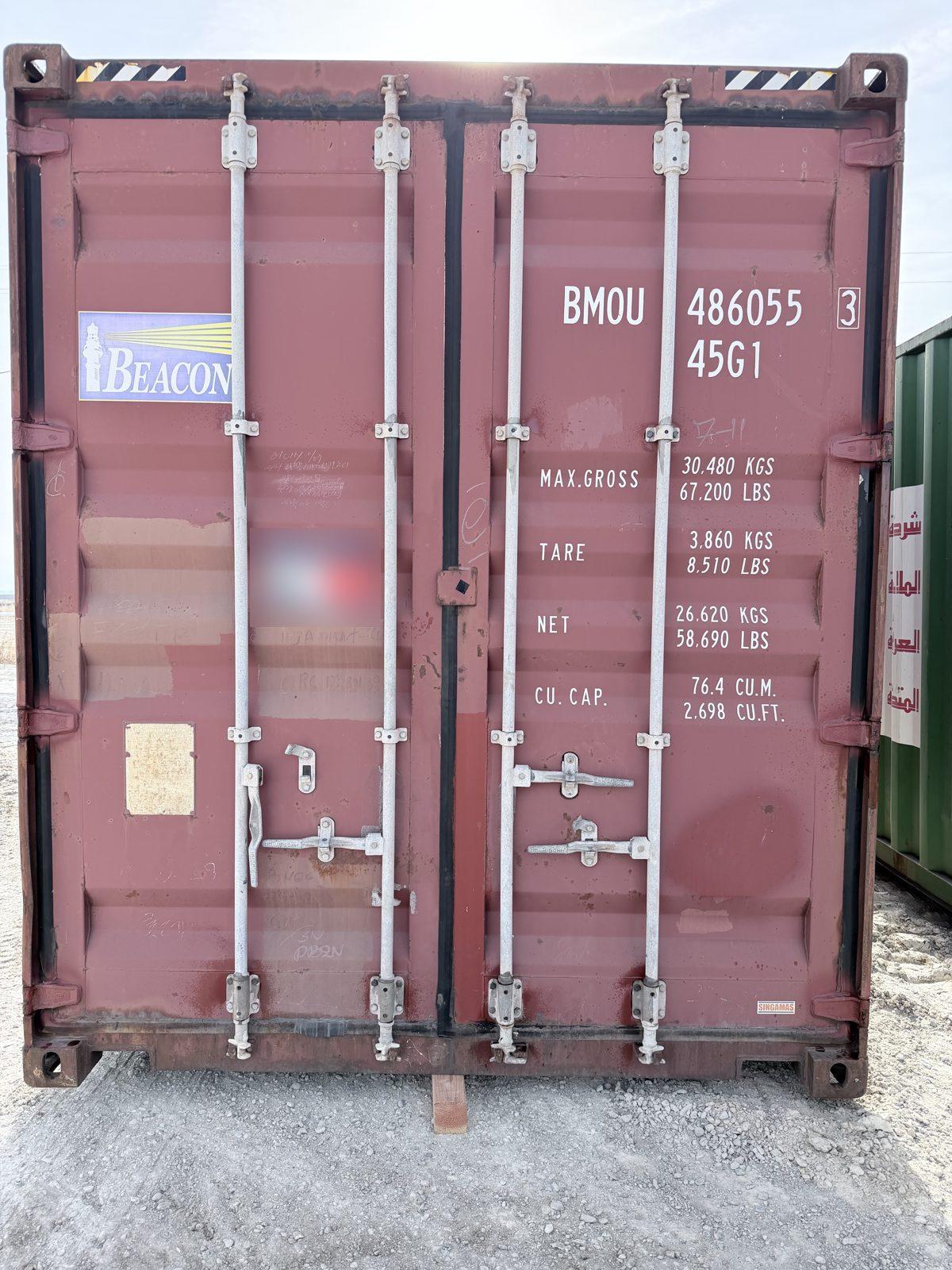
- The roof. Look for soft spots, deep rust, or patches. From inside with the doors closed, look up for any pinholes of light.
- The bottom rails. These run along the base and take the brunt of standing water. Surface rust is normal. Flaking steel you can poke through is not.
- The door seals and hardware. The rubber gaskets should be in place, and the locking bars should move.
- The floor. Most standard containers have plywood floors, per CNTNR Partners. Look for soft or delaminated areas.
How to make a container last longer
None of this takes much time. A once-a-year walk around covers most of it.
- Set it level, on firm ground that drains. This is the single best thing you can do on day one.
- Keep the roof clear. Sweep off leaves, branches, and heavy snow so water can run off instead of sitting.
- Touch up scratches. Wire brush the rust, then hit it with a metal primer and paint. It's a cheap fix that stops small problems from spreading.
- Keep air moving. Containers can sweat inside when warm, damp air hits cold steel. Vents help, and they're an add-on you can ask about when you order.
- Grease the door hardware. A little lubricant on the hinges and locking bars keeps the doors working smoothly for years.
- Don't pile dirt or mulch against the sides. Soil holds moisture right against the steel.
Buy, rent, or rent to own
If you only need a container for a season or a project, how long it lasts may not matter to you at all. We rent 20' and 40' containers month to month with a 3-month minimum, and the shipping container rental page lists the rates.
If you're planning to keep it for years, buying usually makes more sense. You can choose a 40' High Cube, a 40' Standard, or a 20' Standard, new or used. When you buy outright, most areas let you pay on delivery, so you get to look the container over before you pay. Delivery usually takes 1 to 2 weeks, with a rush option if you need it sooner.
One more thing: because people know containers last, they're popular with scammers too. If a price looks far below everything else, read our guide on how to avoid shipping container scams before you send any money.
Getting a price
Price depends on the size, the condition, and how far your ZIP is from the nearest depot, so we quote it delivered to your address. Send us your ZIP and the size you want. If you're torn between new and used, check "Not sure" and we'll price both so you can weigh the extra years against the cost.
Questions
How long does a shipping container last on land?
There's no single number, but a container on land usually lasts far longer than its 10 to 15 years at sea, because it's no longer stacked, lifted, and soaked in salt spray every week. One container leasing and sales company says new containers kept in domestic use last more than 20 to 25 years. Climate and basic care make the biggest difference.
How long does a used shipping container last?
A used container has already finished its working life at sea, often 10 to 15 years of it. On land it can keep going for many more years if it stays dry. Look at the roof, the bottom rails, and the door seals on delivery day. Those are the spots that show how much life is left.
Do shipping containers rust?
Yes, but slowly when they can dry out. Containers are built from weathering steel, sometimes called corten, which forms a tight layer of rust that protects the steel underneath. The trouble starts when water sits on the steel for long stretches, like puddles on the roof or a base that sinks into mud.
Is a new container worth it for a longer life?
If you want the most years out of one box, or it'll be in view every day, a One-Trip (New) container makes sense since it has only crossed the ocean once. If you need dry, secure storage and don't mind dents and surface rust, a Wind & Watertight (Used) container does the same job for less.
What makes a shipping container wear out faster?
Salt air near the coast, humid weather, water pooling on the roof, a base that sinks or tilts, and scratches left unpainted. Weathering steel needs to dry out between wet spells to protect itself, so anything that keeps it wet speeds up rust.